
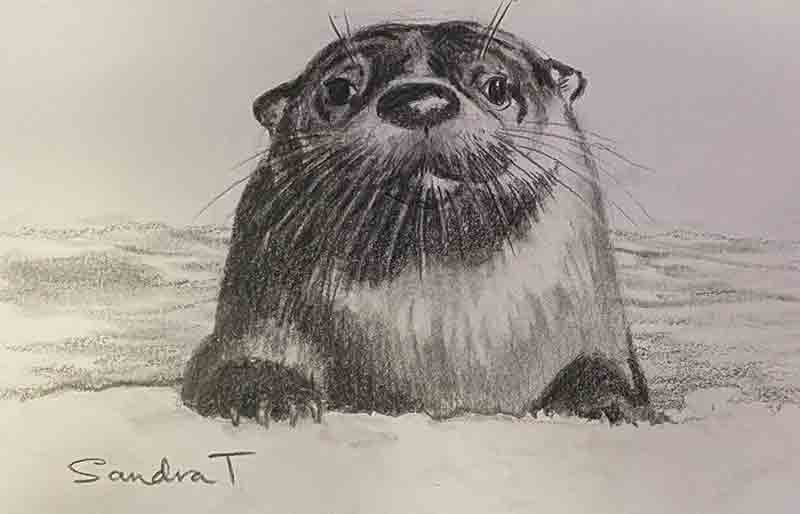
Many artists believe realism comes from talent, but it actually comes from observation. Why Your Wildlife Drawings Don’t Look Realistic Yet
Have you ever spent hours on a wildlife drawing only to feel that something just doesn’t look quite right?
You’re not alone.
One of the most common comments I hear from students is:
“I can see the animal, but it doesn’t look realistic.”
The good news is that realistic wildlife art isn’t about having natural talent. It’s about learning to observe what you’re actually seeing and understanding a few simple techniques that make a huge difference.
Let’s look at some of the most common reasons wildlife drawings don’t yet look realistic—and what you can do about them.
1. You’re Drawing What You Think You See
When we draw an animal, our brain often fills in information from memory.
For example, we know a kangaroo has fur, ears and eyes, so we draw what we think those features should look like.
Professional artists do something different.
They carefully observe the reference and draw exactly what they see, not what they expect to see.
Next time you’re drawing, slow down and really look at your reference photo. Pay attention to shapes, angles, shadows and tiny details you might normally overlook.
You may be surprised how different the real animal is from the picture in your mind.
2. The Values Aren’t Dark Enough
Value refers to the lightness or darkness of a colour.
Many beginner artists are afraid to make areas dark enough.
As a result, their artwork can look flat and lacking depth.
Take a close look at your reference photo.
Where are the darkest shadows?
Where are the brightest highlights?
Creating a stronger contrast between light and dark areas helps give your artwork dimension and realism.
Don’t be afraid to build up those darker tones gradually.
3. You’re Trying to Draw Every Hair
One of the biggest mistakes wildlife artists make is attempting to draw every individual hair or feather.
In reality, our eyes don’t see every strand.
Instead, we see groups of shapes, shadows and textures.
Focus on creating the illusion of fur rather than drawing each hair.
When the overall texture and direction are correct, the viewer’s brain fills in the rest.
This approach not only looks more realistic but also saves a lot of time and frustration.
4. The Eyes Need More Attention
The eyes are often the focal point of wildlife art.
If the eyes look lifeless, the whole drawing can feel flat.
Look carefully for:
- Reflections and catchlights
- Subtle colour changes
- Dark shadows around the eyelids
- Tiny details that create expression
A well-drawn eye instantly brings an animal to life.
It’s often worth spending extra time perfecting this area.
5. You’re Rushing the Process
Many artists want immediate results.
Unfortunately, wildlife art rewards patience.
Building layers slowly allows colours to blend naturally and creates depth that simply can’t be achieved in a hurry.
Whether you’re working with Pitt Pastel Pencils, graphite, watercolour or acrylics, taking your time will almost always produce a better result.
Remember, every layer contributes to the final artwork.
Realism Comes From Observation
The artists whose work you admire weren’t born knowing how to create realistic wildlife art.
They learned to observe more carefully and practised the techniques that create realism.
The encouraging news is that these are skills anyone can develop.
Every drawing teaches you something new.
Every sketch improves your observation.
Every artwork gets you one step closer to creating the wildlife art you’ve always wanted to produce.
So don’t be discouraged if your drawings don’t yet look as realistic as you’d like.
Keep practising, keep observing, and most importantly, keep enjoying the journey.
Want to Improve Faster?
If you’d like step-by-step guidance, be sure to check out our free Sketch Challenge and wildlife tutorials. You’ll learn simple techniques that help artists of all skill levels create realistic wildlife artwork with confidence.
This is approximately the same length and style as your existing articles and is SEO-friendly for keywords such as realistic wildlife drawing, wildlife art tips, how to draw animals realistically, and beginner wildlife art. I can also write the remaining 9 articles in the same ready-to-publish format.